01
Major Depressive Disorder (MDD)
👉 Ages 15+
For Patients
Discover personalized, non-invasive TMS treatment designed around your symptoms, treatment history, lifestyle, and goals. Treatment is completed in our office while you remain awake, with no anesthesia required.
👉 Ages 15+
👉 Ages 18+
👉 Ages 18+
👉 Ages 15+ (if within MDD indication)
TMS Therapy FAQs
Find clear answers about TMS treatment, eligibility, possible side effects, insurance coverage, and what you can expect during treatment.
TMS is a non-invasive brain stimulation treatment that uses gentle magnetic pulses to activate areas of the brain involved in mood regulation.
Think of it like giving the brain's mood circuits a targeted reset signal. Treatment is completed in an office setting, you remain awake the entire time, and no anesthesia is required.
Most patients can drive themselves home and continue their usual activities afterward unless their provider advises otherwise.
TMS is commonly considered for adults with depression who have not improved enough with medication or who experience unwanted medication side effects.
The best way to determine whether TMS may be right for you is through a consultation. Your provider will review your symptoms, treatment history, medications, medical history, and overall health.
TMS has helped many people experience meaningful improvement in depression symptoms, particularly when medication has not provided enough relief.
Some clinical studies have reported that approximately 70% of patients experienced meaningful improvement after completing a full treatment course.
Every brain and treatment history is different, so individual results vary. Your provider can help you understand what outcomes may be realistic for you.
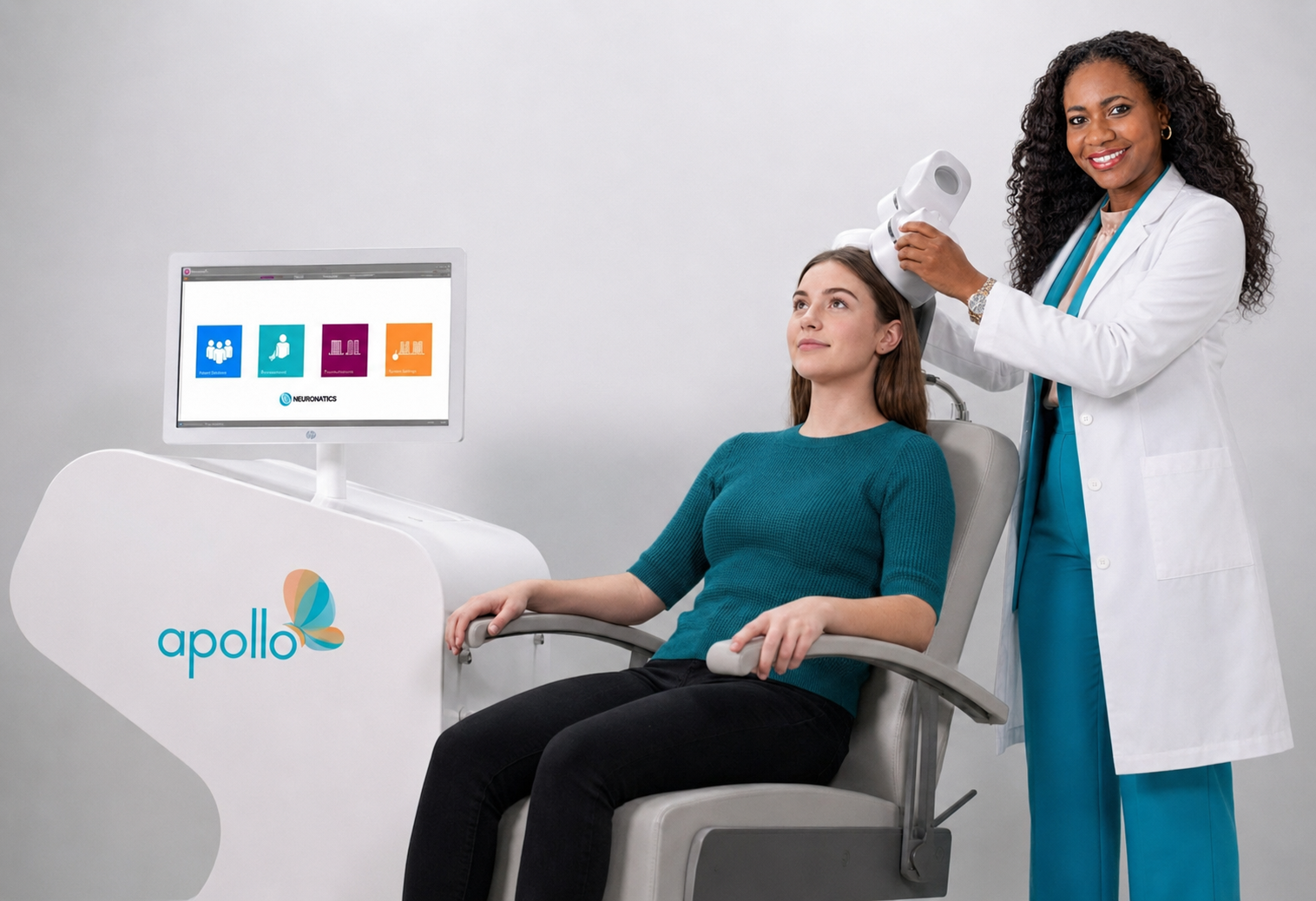
During treatment, you relax in a comfortable chair while a magnetic coil is positioned near your scalp.
You may hear clicking sounds and feel a tapping or knocking sensation. Session length depends on the treatment protocol and may be approximately 30 minutes.
Most patients can return to their normal activities and drive themselves home afterward.
TMS is generally well tolerated.
Common side effects may include mild scalp discomfort, temporary headache, tingling, or muscle movement near the treatment area.
Serious side effects are uncommon. Your provider will complete a detailed safety screening before treatment begins.
A typical TMS treatment course may include approximately 36 sessions over seven to eight weeks, commonly scheduled five days per week.
No anesthesia is needed. You remain awake and can usually drive yourself to and from treatment.
Some people notice improvement earlier, while others experience gradual changes throughout the full course. Your provider will recommend a schedule based on your individual needs and treatment protocol.
Usually, no. Many patients continue taking their current medications while receiving TMS.
Your provider will review your medication list and guide you on the most appropriate plan. Do not stop or change psychiatric medication without speaking with your prescribing provider.
Many insurance plans cover TMS when their medical requirements are met.
Coverage, prior authorization, deductibles, copayments, and eligibility requirements vary by insurance plan.
The HavenNexus team can help verify your benefits and explain your options before treatment begins.
TMS does not work for everyone, but your treatment journey does not have to end there.
Your provider can review your progress and discuss other appropriate treatment options. These may include medication adjustments, Spravato®, IV ketamine, a different TMS protocol, or other clinically appropriate care.
The first step is to schedule a consultation.
During your consultation, your provider will:
TMS is supported by extensive clinical research as a treatment option for depression, including treatment-resistant depression.
Some clinical studies have reported that approximately 70% of patients experienced meaningful improvement in depressive symptoms after completing a full treatment course.
Individual results vary. Your provider will recommend a treatment plan based on your diagnosis, treatment history, health, and personal needs.
No. TMS and ECT are different treatments.
Both treatments may be effective in appropriate situations, but they are recommended for different patients and clinical needs.
TMS may not be appropriate for people with certain metal or electronic devices in or near the head, neck, or treatment area.
These may include certain:
A history of seizures or certain neurological conditions may require additional evaluation.
Dental fillings, joint replacements, and many orthopedic implants do not automatically prevent treatment, but every implant and device should be disclosed during the safety screening.
In selected cases, a provider may consider TMS alongside Spravato® or IV ketamine as part of an individualized plan for treatment-resistant depression.
These treatments work in different ways. Your provider must review your diagnosis, medications, medical history, safety considerations, and previous treatment response before recommending combined treatment.
The Apollo TMS Therapy System has FDA clearance as an adjunctive treatment for Major Depressive Disorder in adolescent patients ages 15–21.
Each adolescent must receive an individual evaluation to determine whether treatment is appropriate.
TMS may also be considered during pregnancy because the procedure is non-invasive and does not involve medication exposure from the TMS procedure itself.
Treatment during pregnancy should be evaluated individually and coordinated with the patient's psychiatric and obstetric healthcare providers.
Watch these short videos to learn more about TMS, what treatment may involve, and how this non-invasive option may fit into a personalized care plan.
TMS Therapy Overview
Understanding TMS Treatment
A TMS consultation is the best way to learn whether this innovative treatment may be a good fit for your symptoms, treatment history, and personal needs.
This information is for general educational purposes and does not replace an individual medical evaluation. Eligibility, recommendations, treatment schedules, and results vary by patient.
Explore HavenNexus services and psychiatric care options available for patients across multiple Florida communities.
Non-invasive mental health treatment using targeted magnetic stimulation.
Personalized treatment provided under professional clinical supervision.
In-office treatment for eligible patients under professional medical supervision.
Mental health concerns don't always follow a traditional schedule, and neither do we. Reach out to our team for general questions and information about our services.
Use our contact form for general inquiries.